
A Vision Logix system
Nothing crosses the line unseen
Deerkha Drishti turns the cameras already watching a farm into an intelligent perimeter. It recognises an elephant, a wild boar or a deer in the dark, tells you where and when within seconds, and drives the animal off before it reaches the crop.
- Built in Thiruvananthapuram
- Piloted in Vadasserikkara, Kerala
- Runs on-site, survives an outage
The problem
Fifty lakh rupees of pineapple, gone in a season
For generations, farmers across Kerala have lived under an unrelenting threat. Elephants, wild boar, leopards and deer come down onto farmland under cover of darkness and wipe out an entire harvest in a single night.
A ten-acre pineapple farm in Vadasserikkara lost close to ₹50 lakh in one year to elephants trampling the crop. Solar fencing, noise-makers and every traditional deterrent had been tried, and abandoned.
The cameras were already there. What was missing was something that could watch them all night, know what it was looking at, and act on it.
Capabilities
Everything the system does, on the box in the field
Nine things happen between an animal stepping into frame and a farmer's phone buzzing. All of them run on a single edge computer at the site.
- 01
Movement screening
Cameras are screened cheaply first, so the heavy work only runs when something actually moves. Grass in the wind doesn't wake the system, and one unit carries a full camera network on a power budget solar can hold.
- 02
Species classification
Models trained on real Kerala farmland footage classify what entered the frame — elephant, wild boar, leopard, deer or person — and a second independent check has to agree before it counts. Each class carries its own threshold, not one blunt setting.
- 03
Regions of interest
You draw the polygon that matters — the crop, the fence line, the approach path — roughly 80 metres out. A detection outside it is logged, not alarmed.
- 04
Night and infrared
Most intrusions start after 8 PM. Infrared cameras carry the perimeter through the dark, and the system switches its own day and night behaviour on the site's clock.
- 05
Sound and light deterrence
A confirmed detection closes a relay and fires a strobe-and-audio sequence tuned to that species — enough to unsettle the animal and turn it back before it reaches the crop.
- 06
Instant geo-tagged alerts
The annotated frame, the species, the camera and the location reach your phone in seconds — the farmer, the estate manager, or the forest department, in whatever combination the site needs.
- 07
Live view from anywhere
Open any camera on the dashboard from a phone. The stream is pulled on demand over a private encrypted link, so nothing of yours is exposed to the open internet.
- 08
Recording and review
Continuous footage and short event clips are written to disk at the site, indexed by date and camera, and swept oldest-first so the drive never fills.
- 09
Offline by default
If the site's internet dies, detection, recording and the alarm keep running. Alerts queue in a local database and deliver the moment the link returns.
How it works
Detect. Alert. Deter.
Three things have to happen fast enough to matter, and all three happen before anything leaves the farm.
01
Detect
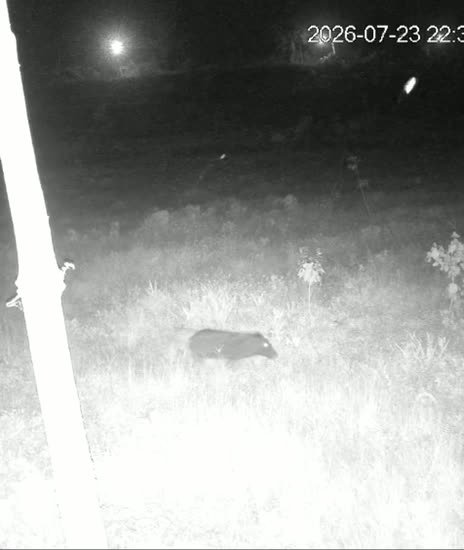
Movement inside a defined region wakes the detector. A deep neural network classifies what it sees and a second model confirms the call before anything is treated as real. False triggers were the first thing the pilot was tuned against.
02
Alert
An annotated snapshot, the animal type, the camera and the geo location are dispatched in seconds to whoever needs them — the farmer at 2 AM, the estate office, or the forest department.
03
Deter
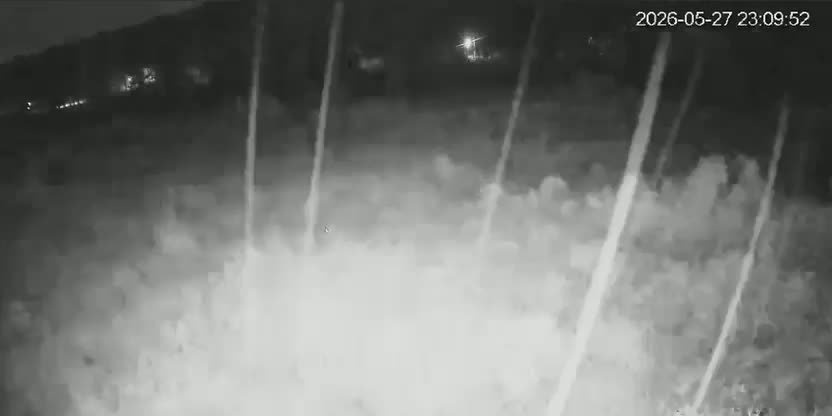
At the same instant the box fires the deterrent — preset audio and flashing light on a relay wired at the site. The strobe is bright enough to blow out the camera's own exposure. It runs locally, so it fires whether or not the internet is up.
From the pilot
Three cameras. One season.
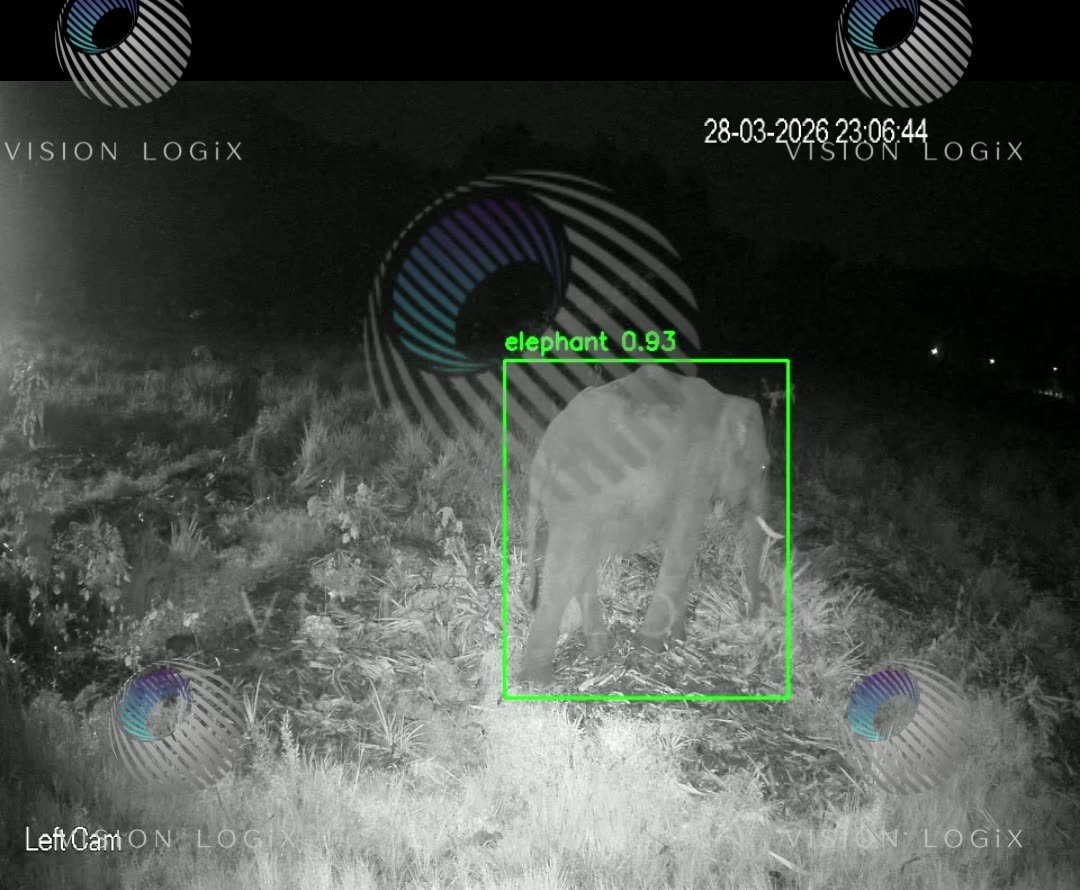
The trial at Vadasserikkara was run to settle the question. Data from real detections was fed back to retrain the model, improving accuracy and cutting false triggers.
- Cameras at the centre of a ten-acre farm
- 3Cameras at the centre of a ten-acre farm
- When most intrusions began
- 8 PMWhen most intrusions began
- Typical region of interest
- 80 mTypical region of interest
- Species logged across multiple nights
- 3Species logged across multiple nights
Detections
What the cameras actually saw
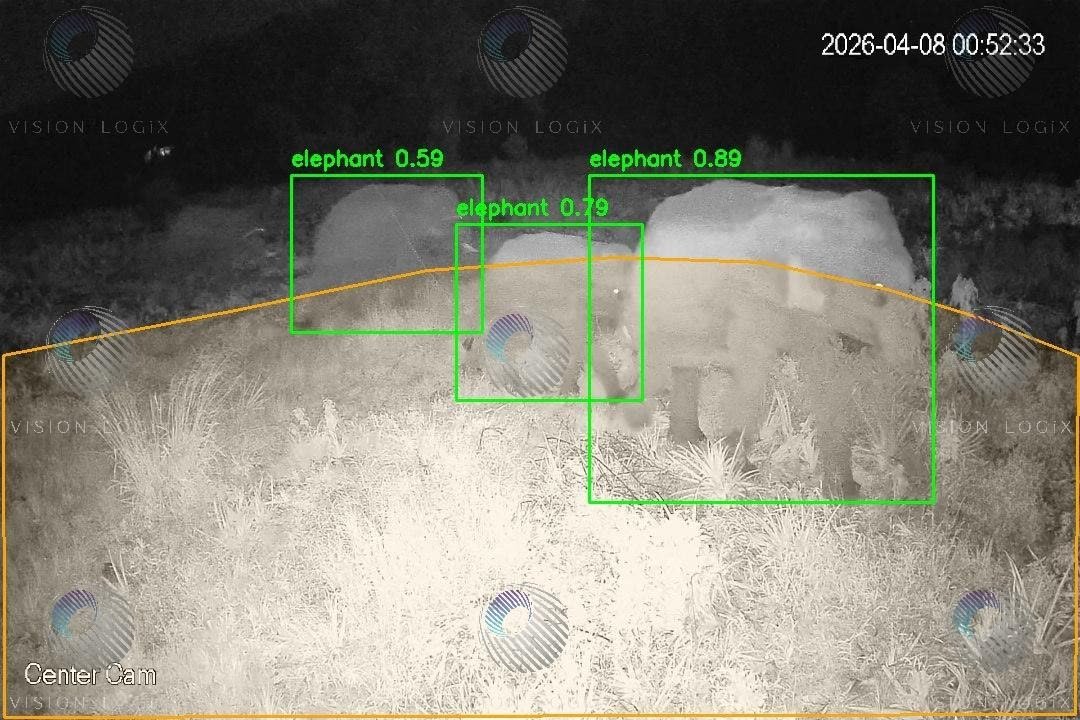
Center Cam · 8 April 2026 · 00:52
Three separate detections at 0.59, 0.79 and 0.89 — a herd, not a single animal. This is the case the deterrent is really for.
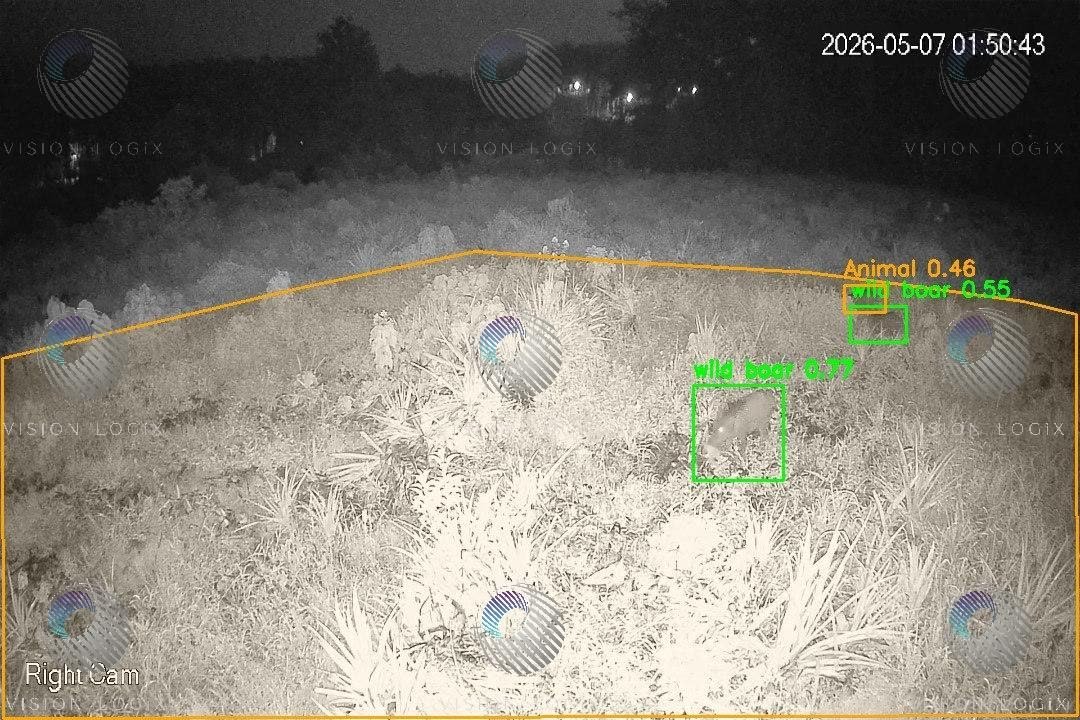
Right Cam · 7 May 2026 · 01:50
First held as an animal at 0.46, then confirmed as wild boar at 0.55 before the alert was raised. Nothing is treated as real until the second check agrees.
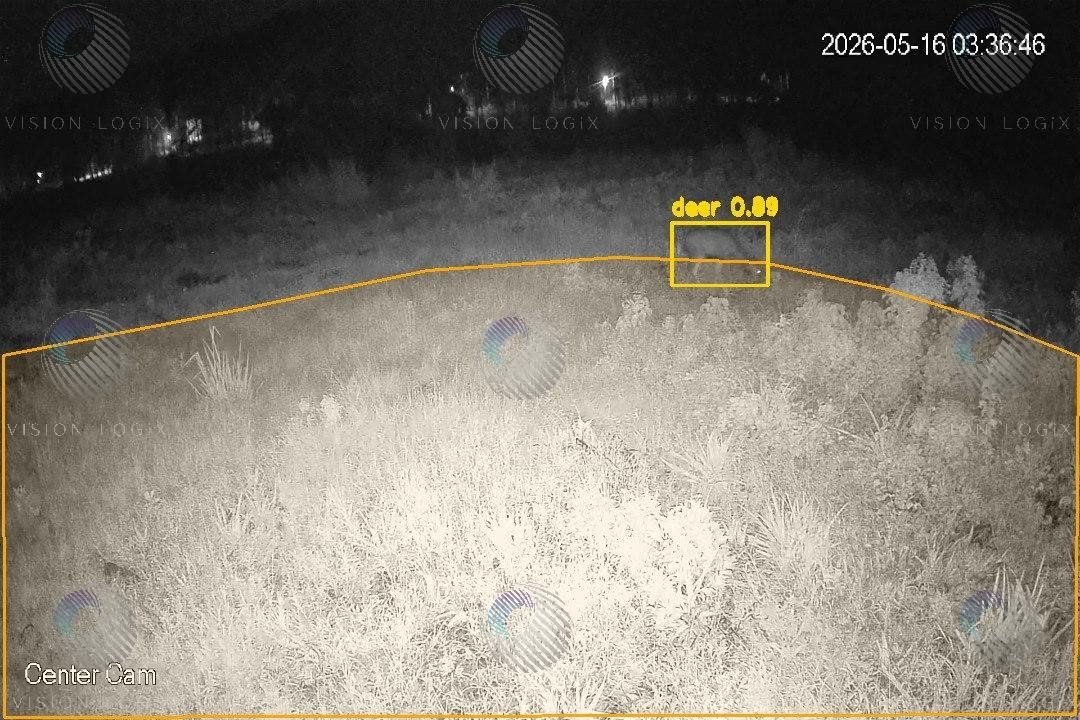
Center Cam · 16 May 2026 · 03:36
A deer at 0.89 sitting right on the edge of the region — the exact case per-camera polygons exist to resolve.
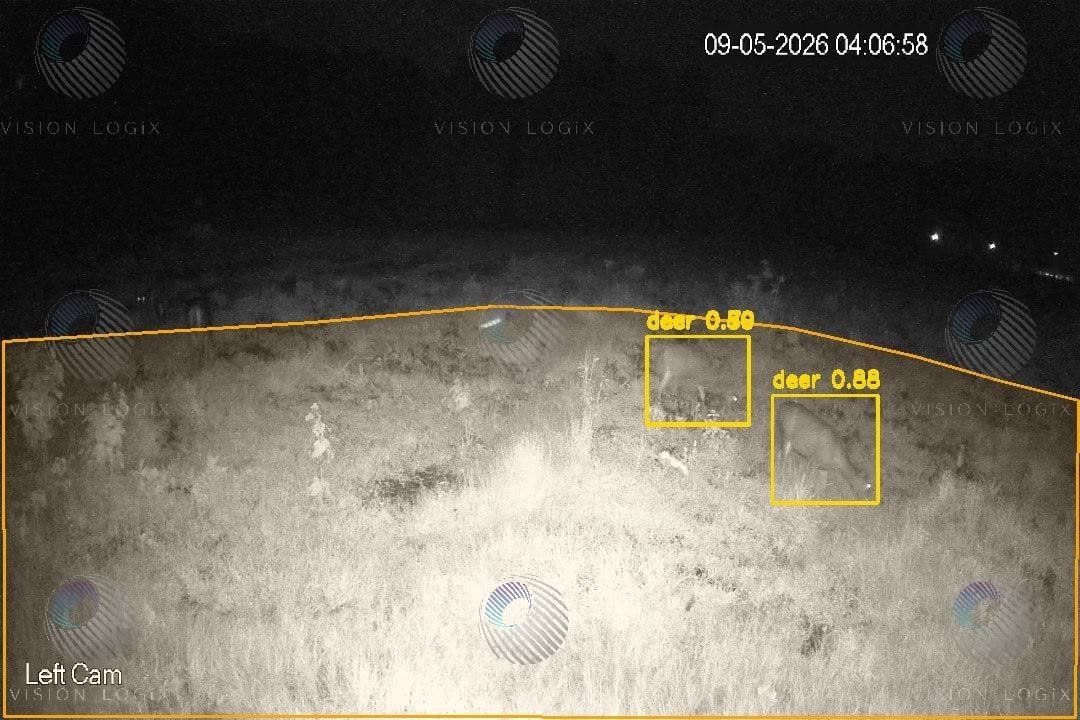
Left Cam · 9 May 2026 · 04:06
Two animals held simultaneously at 0.89 and 0.88 — and still one alert, not forty. Suppressing duplicates is as much of the job as spotting the animal.
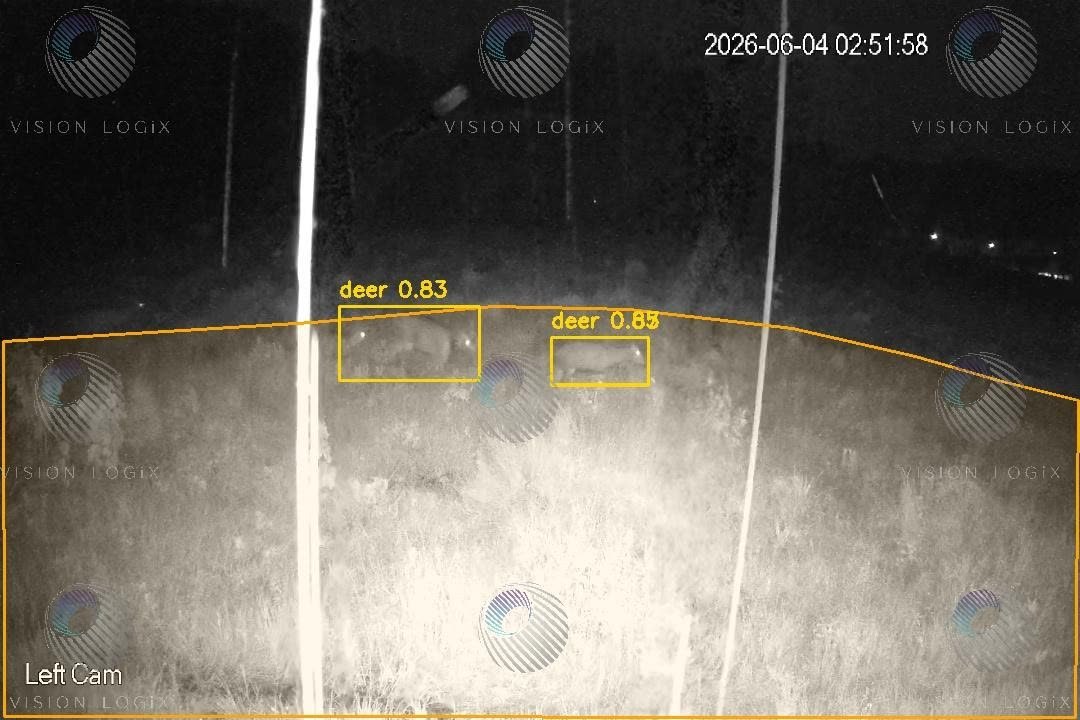
Left Cam · 4 June 2026 · 02:51
Both animals at 0.83, near the far edge of the roughly 80-metre region. Distance is where detection gets hard and where infrared earns its place.
On the ground
One box. Everything runs on it.
A single sealed unit at the site does the watching, the recognising, the recording and the deterrence. The cloud only holds identity, history and the dashboard — nothing the perimeter depends on to work.
What the site owns
- Every detection decision
- The deterrent, fired locally
- The full footage archive
- Cameras, on an isolated network
- Its own configuration, cached
- Continued operation when the link drops
What the cloud holds
- Your account and access
- Alert history and evidence
- Live view, opened on demand
- Site settings you can change remotely
- Health of every deployed unit
In the press
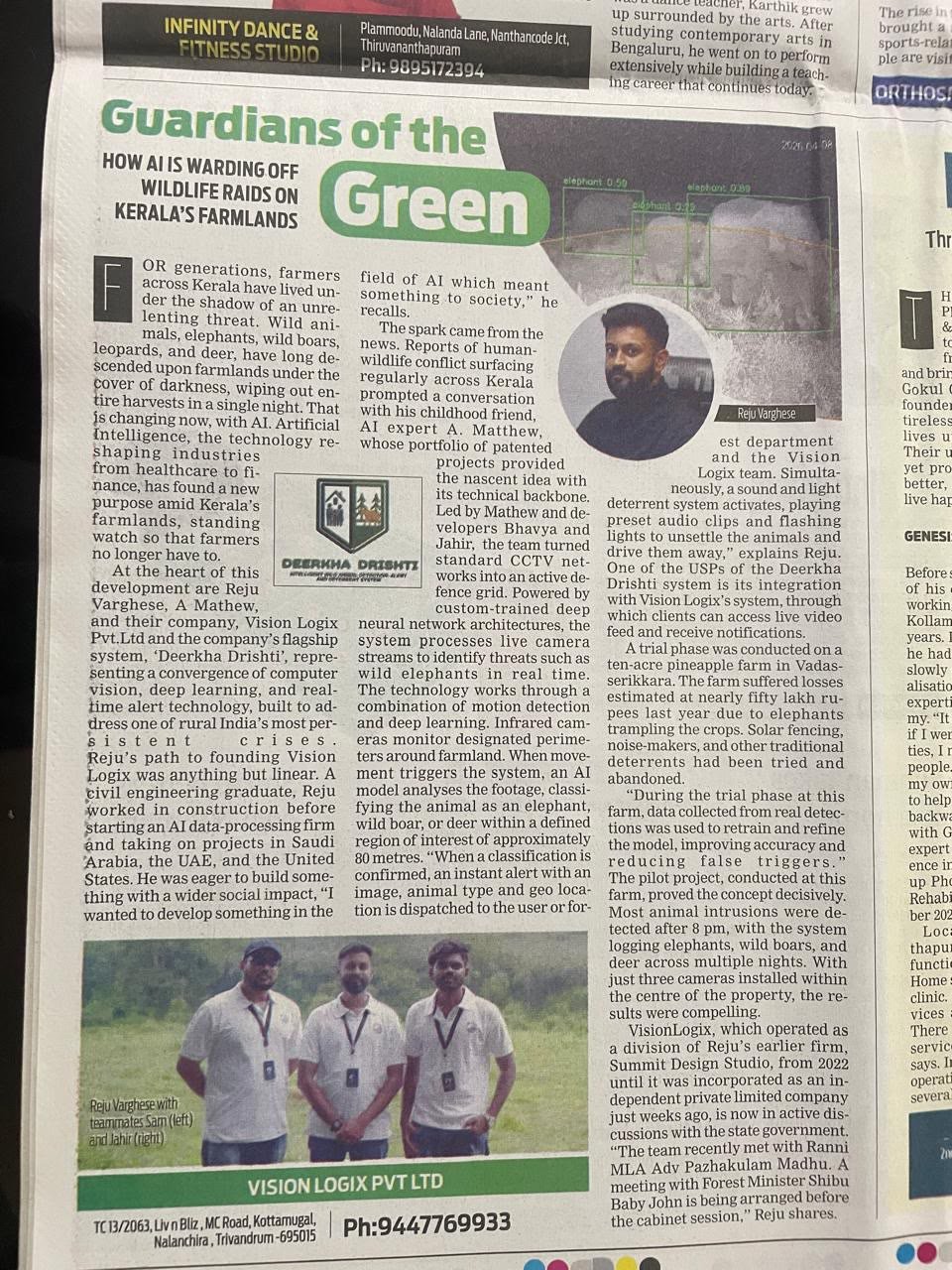
Guardians of the Green
A feature on how AI is warding off wildlife raids on Kerala's farmlands, and on the team behind Deerkha Drishti. Vision Logix operated as a division of Summit Design Studio from 2022 before being incorporated as an independent private limited company.
The company is in active discussion with the state government. The team has met the Ranni MLA, Adv. Pazhakulam Madhu, and a meeting with Forest Minister Shibu Baby John is being arranged.
The night is the problem. Give it eyes.
Tell us about the site — how many acres, which animals, what cameras are already there — and we will tell you what it takes.